
Why Natural Gas Demand Matters
Natural gas plays a central role in the U.S. energy system. It fuels power plants, heats homes and businesses, supports manufacturing, and increasingly connects domestic markets to global energy flows through liquefied natural gas (LNG) exports.
According to the U.S. Energy Information Administration (EIA), detailed data on production, consumption, storage, and exports is available through its Natural Gas Data portal. Tracking natural gas demand trends helps investors understand broader energy market fundamentals. Changes in consumption patterns may reflect economic conditions, infrastructure development, technological shifts, and evolving policy frameworks.
Power Generation Remains the Largest Driver
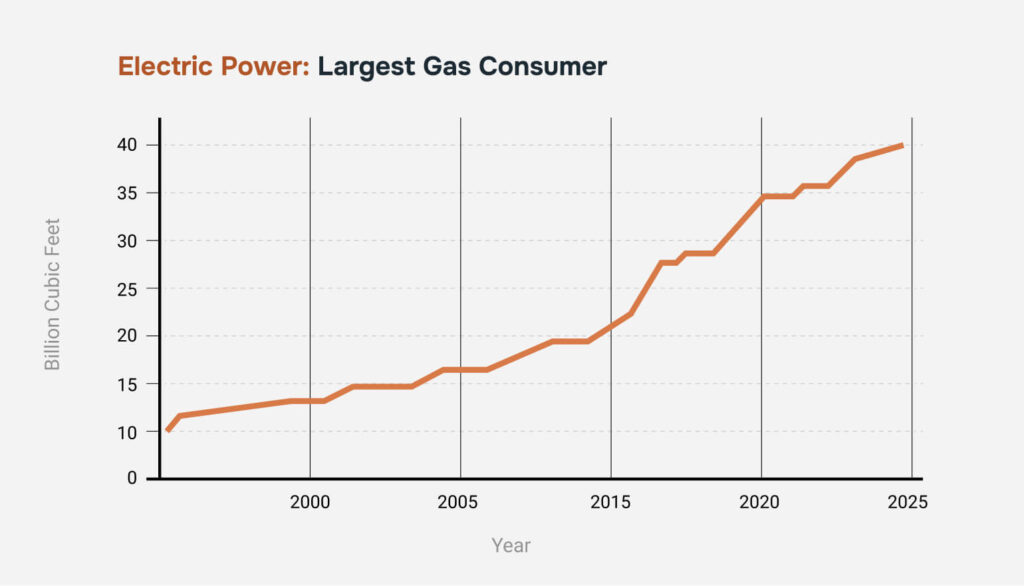
The electric power sector remains the largest consumer of natural gas in the United States. EIA data on natural gas consumption by end use shows that gas-fired generation has expanded over the past decade during a period in which utilities retired coal capacity and increased reliance on flexible generation sources.
Natural gas plants are valued for their ability to ramp output up or down quickly. This flexibility supports grid reliability, especially as renewable generation from wind and solar grows. The EIA’s Electric Power Monthly provides ongoing insight into how fuel sources contribute to the U.S. generation mix.
For energy investors, this linkage between weather patterns, grid dynamics, and gas consumption illustrates the role natural gas currently plays in supporting grid operations.
LNG Exports and Global Linkages
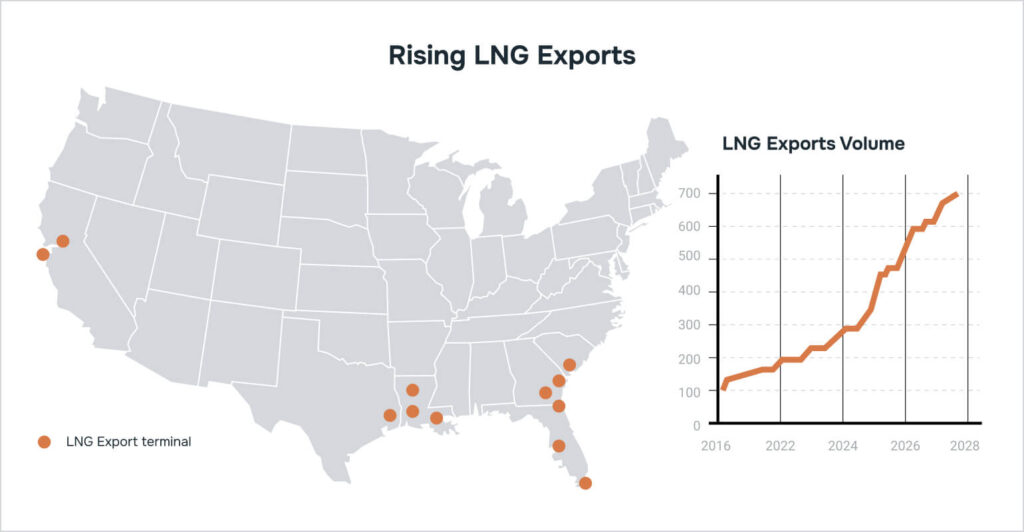
One of the most significant structural changes in U.S. natural gas demand has been the rise of LNG exports. The United States is among the world’s largest LNG suppliers, connecting domestic production to international markets in Europe, Asia, and Latin America.
The EIA tracks this growth through its U.S. LNG export data and regularly analyzes global developments in the Short-Term Energy Outlook. As export capacity has expanded, domestic demand has become more closely linked to global energy market conditions.
International price signals, geopolitical developments, and overseas storage levels can all affect U.S. gas flows. This global integration means natural gas is no longer solely a domestic supply-demand story. Instead, it sits at the intersection of global trade, infrastructure investment, and energy security.
Industrial and Seasonal Demand Patterns
Beyond power generation and exports, the industrial sector represents a stable and significant source of demand. Natural gas is used as both a fuel and feedstock in industries such as chemicals, fertilizer, steel, and manufacturing. EIA’s industrial consumption data illustrates that this segment has historically provided a relatively steady baseline of demand.
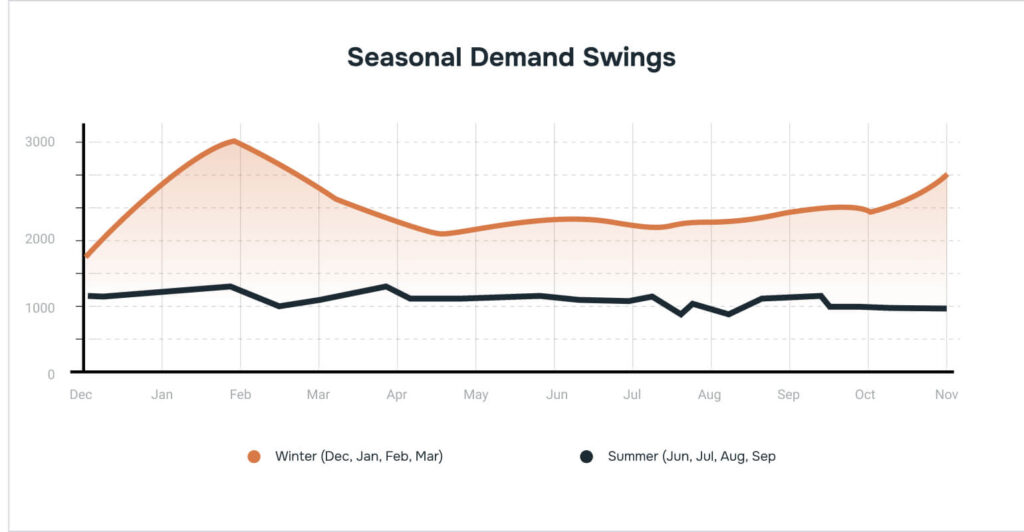
Residential and commercial consumption, meanwhile, is highly seasonal. Winter heating demand can lead to sharp increases in usage, drawing down storage inventories and influencing short-term market dynamics. Weekly storage changes are reported in the EIA’s Natural Gas Storage Report.
These seasonal patterns underscore the importance of storage levels, pipeline infrastructure, and regional supply balances. They also demonstrate how demand is shaped by both structural factors and short-term variability.
What Demand Trends Signal for Long-Term Investors
Natural gas demand trends provide insight into broader energy system evolution:
- Growth in LNG exports reflects infrastructure expansion and global integration.
- Power sector demand highlights the fuel’s role in grid reliability.
- Industrial usage may reflect levels of economic activity and domestic manufacturing output.
- Seasonal swings reinforce the importance of storage and logistics.
For long-term investors, understanding these drivers provides context for evaluating natural gas within the broader energy system.
Demand data does not predict price movements. Instead, it helps clarify how infrastructure, policy, weather, and economic activity interact within energy markets.
As energy systems evolve, natural gas demand trends remain one lens through which broader market developments can be evaluated.
What This Means for Long-Term Energy Investors
For long-term investors, understanding global energy markets is essential—even when evaluating domestic-focused operators.
Key considerations include:
- Oil pricing is influenced by global supply-demand balances.
- LNG exports connect U.S. natural gas production to international markets.
- Geopolitical events may influence supply flows and price signals.
- Capital discipline moderates how quickly U.S. production responds.
U.S. production trends are not solely driven by domestic factors. It is part of a globally interconnected energy system shaped by international policy, trade flows, and long-term demand trends.
Resources
U.S. Energy Information Administration – Natural Gas Data
Comprehensive data on U.S. natural gas production, consumption, storage, and exports.
https://www.eia.gov/naturalgas/
EIA Short-Term Energy Outlook
Monthly projections covering supply, demand, and energy market developments.
https://www.eia.gov/outlooks/steo/