Energy demand forecasts are widely used foundational planning tools. They help governments, utilities, producers, and grid operators understand how much energy consumers are likely to need under a defined set of assumptions.
Organizations like the U.S. Energy Information Administration and the International Energy Agency publish demand outlooks to support system readiness—not to predict prices or market outcomes.
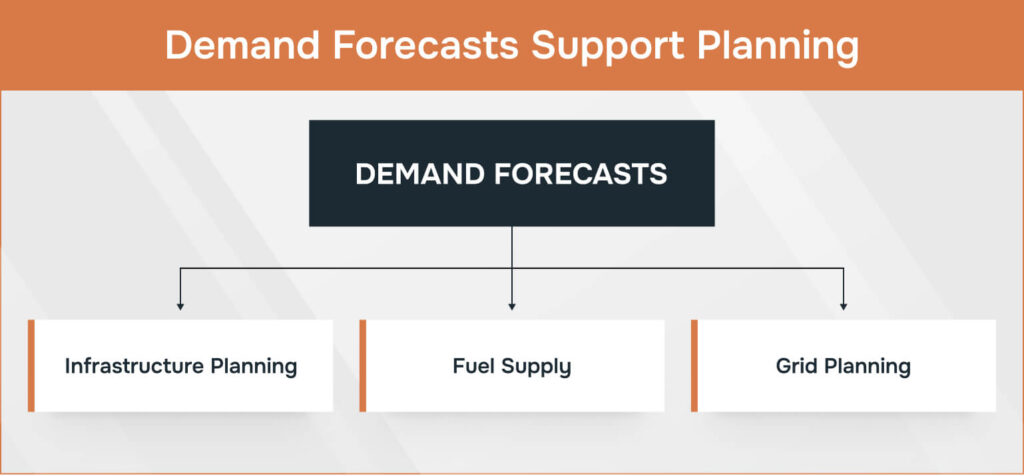
These forecasts answer practical questions:
- How much electricity demand grids may need be prepared to serve
- What level of fuel supply is needed to meet expected consumption
- Where infrastructure constraints might emerge under certain scenarios
How the EIA Builds Demand Forecasts
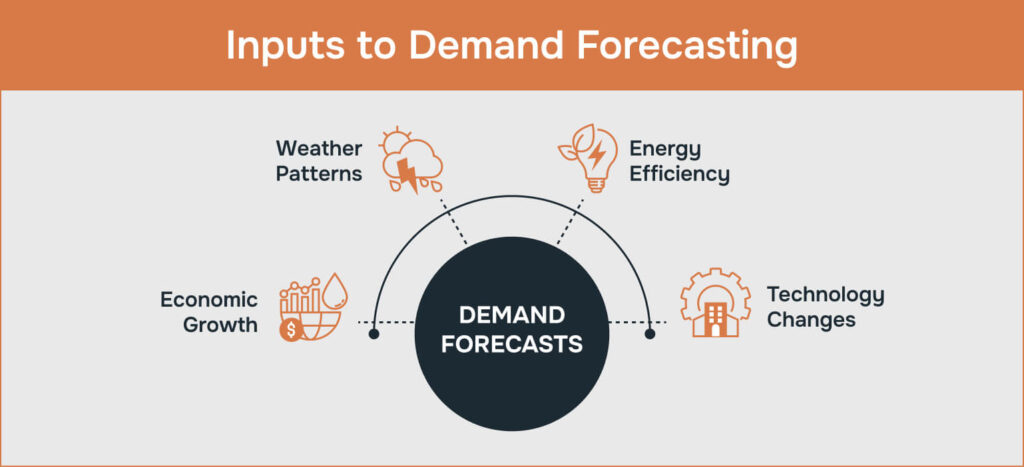
The EIA’s demand projections combine historical consumption data with assumptions about:
- Economic growth
- Weather patterns
- Efficiency improvements
- Technology adoption
- Policy environments already in place
Importantly, forecasts are scenario-based, not predictions. They describe what demand could look like if certain conditions hold—not what will definitively occur.
Why Demand Forecasts Are Often Misinterpreted
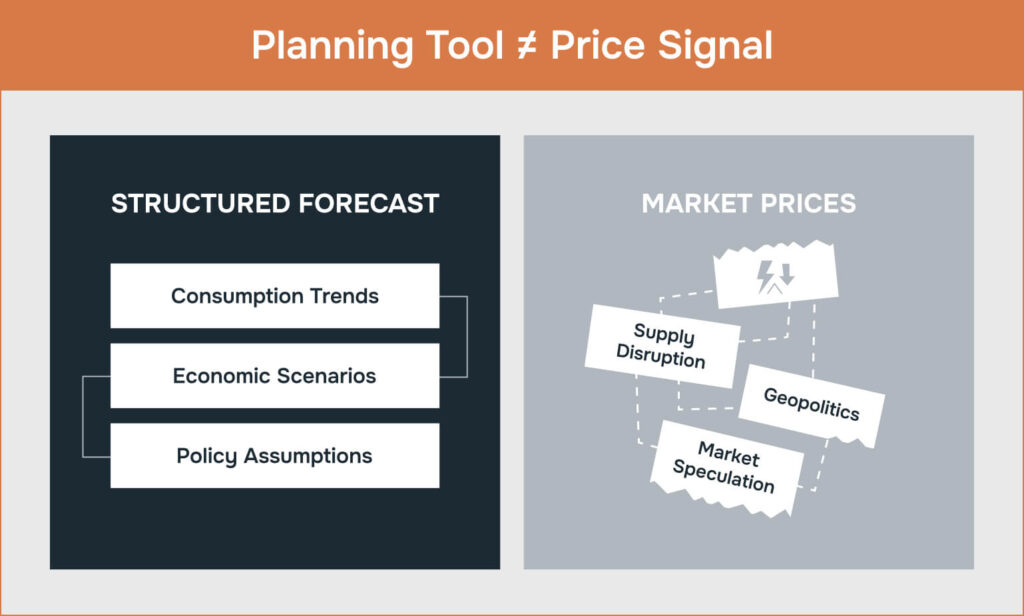
Because demand forecasts are published alongside market commentary, they are sometimes treated as directional price signals. This is a misunderstanding.
Demand forecasts:
- Do not account for short-term market sentiment
- Do not model speculative behavior
- Do not capture supply disruptions or geopolitical shocks in real time
Prices are influenced by the interaction of supply, demand, inventories, logistics, and expectations. Demand forecasts represent only one structured input into that broader system.
Where Demand Forecasts Matter Most
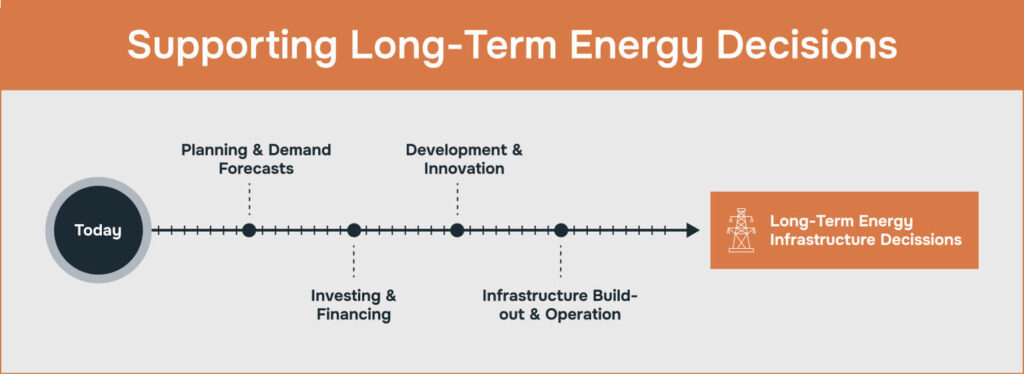
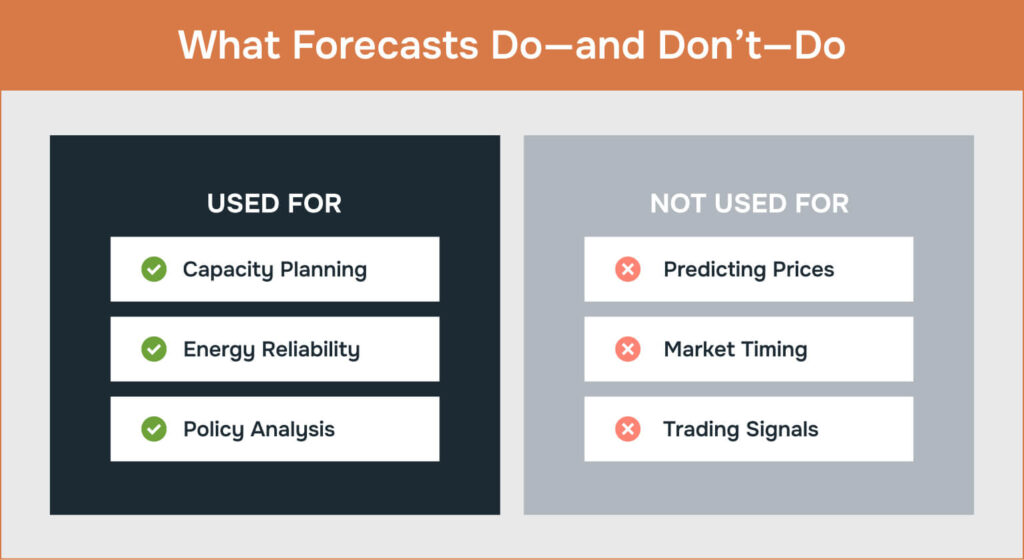
Demand outlooks play a critical role in:
- Infrastructure planning: pipelines, transmission, generation capacity
- Reliability planning: ensuring adequate reserves during peak demand
- Policy analysis: evaluating how existing rules may affect consumption
- Capital allocation: long-cycle investment decisions
For these use cases, stability and transparency are often prioritized over precision.
What Demand Forecasts Do Not Tell Us
It is equally important to understand the limits of demand forecasting. These outlooks are not designed to:
- Predict energy prices
- Signal near-term market turning points
- Replace real-time operational data
Used correctly, demand forecasts provide context—not conclusions.
Resources
EIA Short-Term Energy Outlook (STEO)
Monthly report outlining near-term energy supply, demand, and consumption trends.
https://www.eia.gov/outlooks/steo/
EIA Today in Energy
Educational articles explaining current energy data and trends in plain language.
https://www.eia.gov/todayinenergy/
These resources are provided for general education and independent research. They are not intended as market forecasts or investment guidance.