
Share on:

Energy plays a central role in the global economy. It powers transportation, industry, and daily life. At the same time, it is one of the more cyclical and variable sectors in financial markets.

Setting realistic expectations starts with understanding both sides: energy’s long-term importance and its natural ups and downs.


Energy Is Built Around Cycles
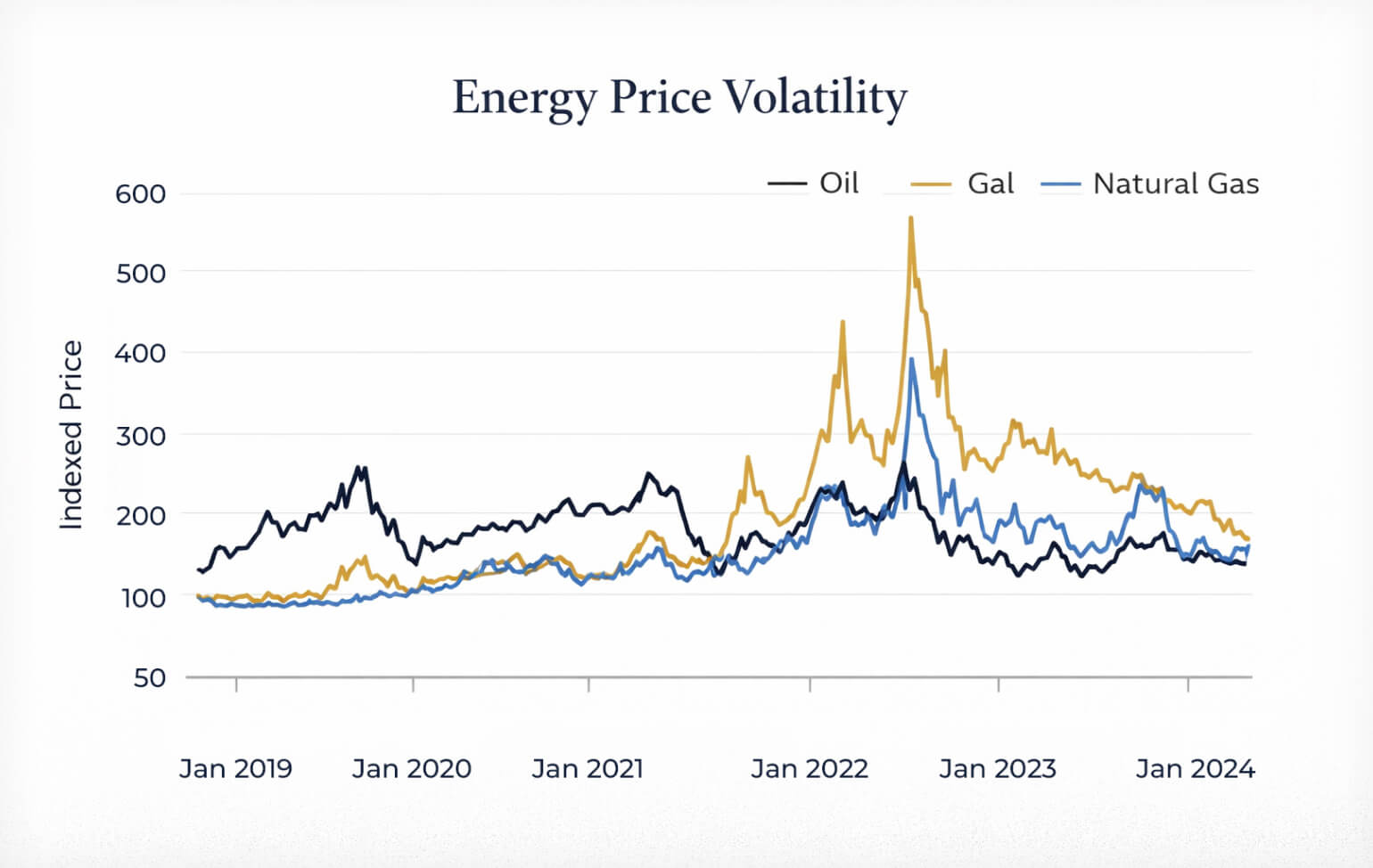
Chart showing fluctuating energy commodity prices over time

Energy markets are closely tied to commodities like oil and natural gas. These prices move in real time and can shift quickly based on supply, demand, and external factors like weather or policy.

Because of this, volatility is a normal part of how the sector functions, not an exception.

Over time, investment in energy has also followed cycles. Periods of higher spending are often followed by pullbacks, depending on market conditions.


Performance Changes Over Time
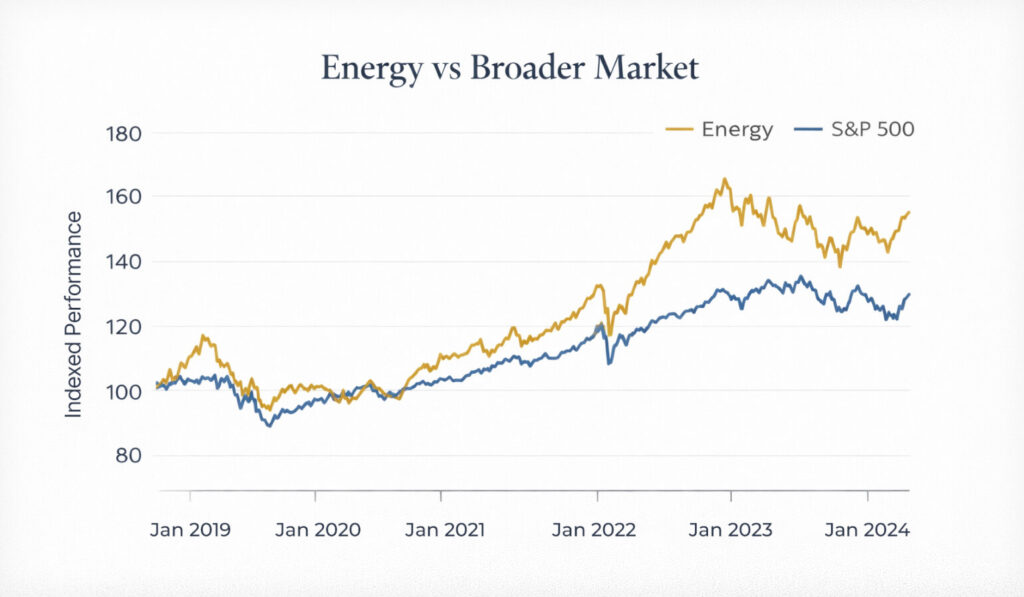
Line chart comparing energy sector performance to the S&P 500

Energy does not tend to move in a straight line.

There have been periods where the sector has lagged broader markets, as well as periods where it has outperformed. These shifts are often tied to supply-demand balances and broader economic conditions.

Looking at energy through a longer-term lens can help put these cycles into context.


Investment Is Evolving
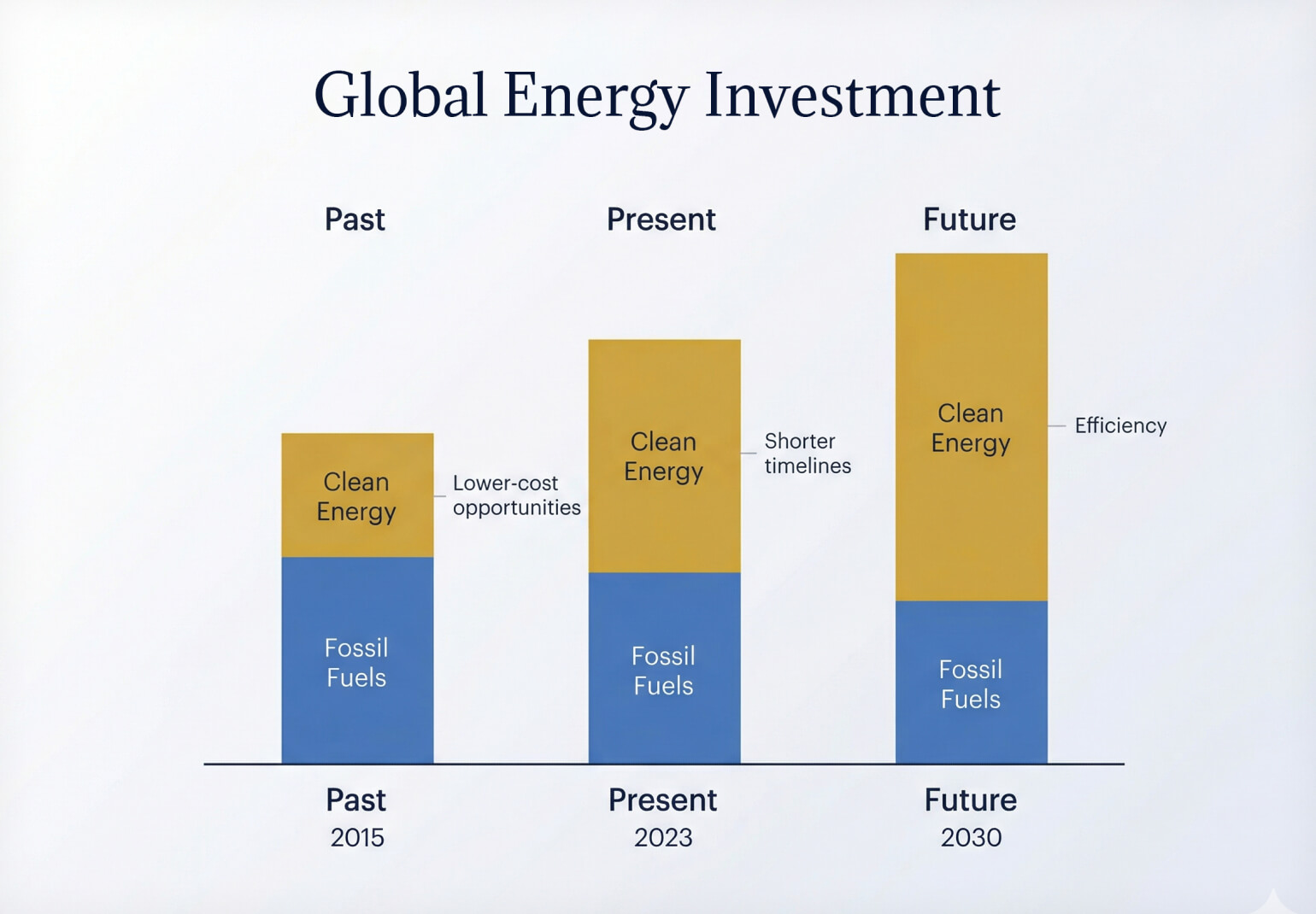
Chart showing distribution of global energy investment

Energy investment today is changing, not disappearing.

Global spending remains significant, with capital flowing into both traditional energy sources and newer technologies. In many cases, companies are focusing on:

  • Lower-cost opportunities
  • Shorter development timelines
  • More efficient operations

This reflects a more measured approach compared to past cycles.


Common Expectation Gaps

Some expectations can make the sector harder to understand:

Assuming steady returns

Energy has historically moved in cycles rather than delivering consistent performance year to year.

Focusing only on short-term prices

While commodity prices matter, many investment decisions are based on longer-term assumptions.

Overlooking differences within the sector

Upstream, midstream, and downstream businesses can behave very differently in terms of stability and returns.


Building a More Balanced View
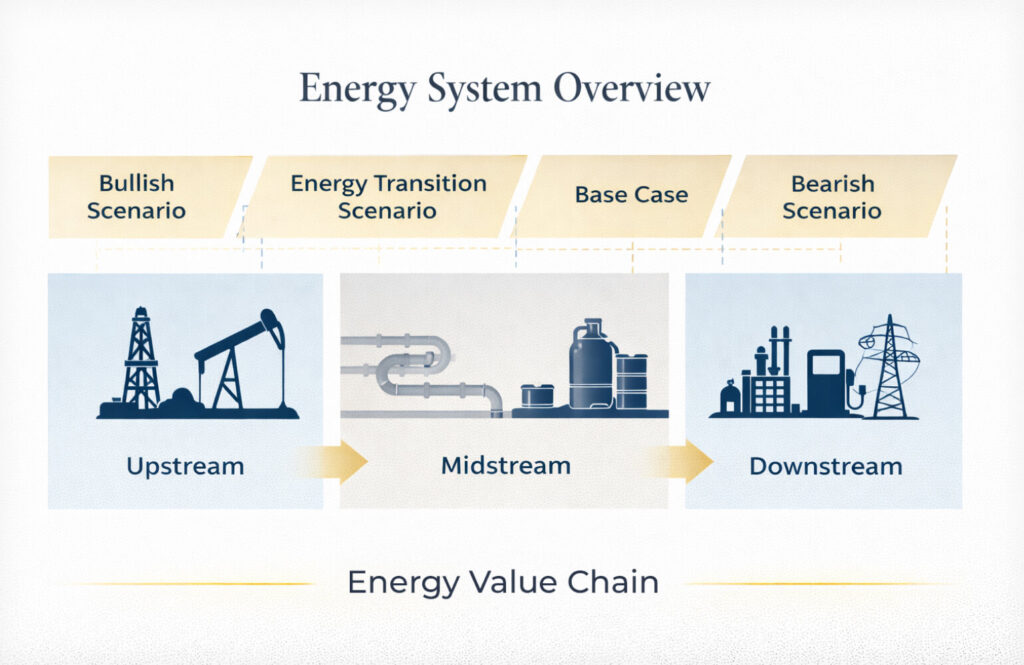
Diagram of the energy value chain and investment scenarios

A more grounded perspective often includes a few key ideas:

Time horizon matters

Short-term results can vary widely, while longer periods may reflect broader cycles.

Different outcomes are possible

Many institutions use multiple scenarios to account for uncertainty in demand, policy, and technology.

Not all energy assets are the same

Different parts of the value chain can offer different risk and return profiles.

The system is adjusting over time

Traditional energy remains essential, while new sources continue to grow alongside it.


A Practical Way to Think About It
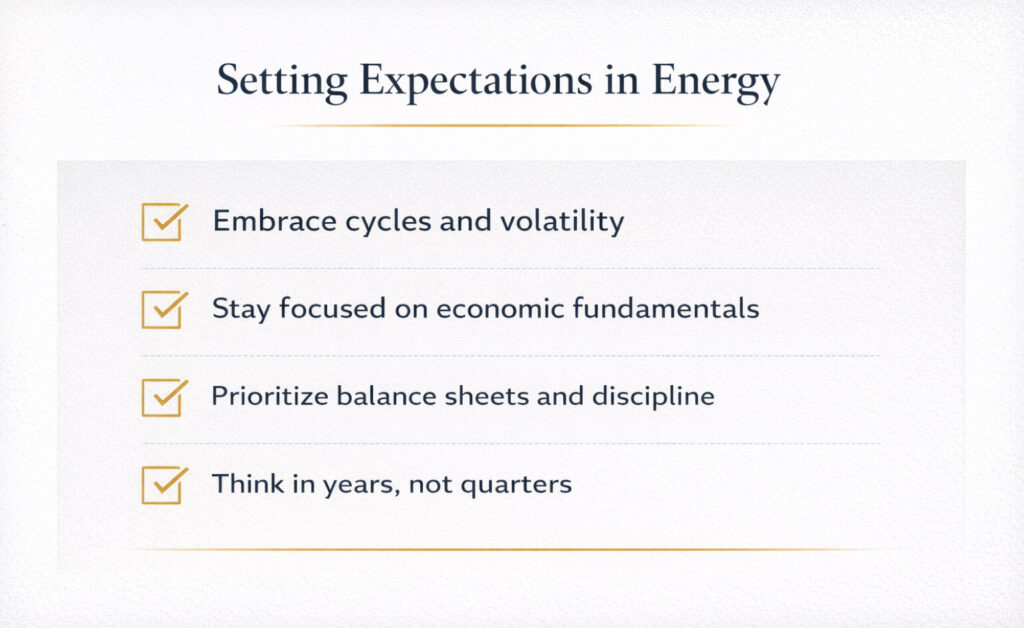
Framework outlining key considerations for energy investing

A simple framework for setting expectations in energy:

  • The sector has historically been more volatile than the broader market
  • Performance has tended to follow cycles rather than steady growth
  • Outcomes can vary based on timing, structure, and asset type
  • Long-term positioning often matters more than short-term movements

Understanding these patterns can make the sector easier to evaluate over time.


Resources

International Energy Agency – World Energy Investment
Global view of energy capital flows across traditional and emerging sources
https://www.renewableinstitute.org/global-energy-investment-hits-record-high-key-takeaways-from-the-ieas-2025-report/

Fortum – “Sure, volatility is here to stay”
Explains structural drivers of persistent energy market volatility
https://www.fortum.com/news-and-publications/forthedoers-blog/sure-volatility-here-stay-it-doesnt-have-be-risk

ScienceDirect – Volatility modeling in energy markets
Academic perspective on persistent and clustered commodity volatility
https://www.sciencedirect.com/science/article/pii/S0306261926002114

IEEFA – Fossil fuel stock performance
Historical analysis of energy sector returns and volatility
https://ieefa.org/articles/another-bad-year-and-decade-fossil-fuel-stocks

DW Energy – Energy cycles and long-term value
Explores cyclical nature of energy investing and long-term positioning
https://www.dwenergygroup.com/energy-cycles-and-long%E2%80%91term-value-in-oil-and-gas-investing/


About Us

Eagle Natural Resources is a privately held oil and gas operating company based in Texas. We offer accredited investors direct access to U.S. energy projects focused on long-term value, transparency, and responsible development.

Contact

Eagle Natural Resources, LLC
RRC # 253075
5445 Legacy Dr. STE 440 Plano TX 75024
Phone: (833) 553-1534

There are significant risks associated with oil and gas investments. Information found on this site is for general purposes only and is not a solicitation to buy or an offer to sell securities. General information on this site is not intended to be used as individual investment or tax advice. Consult your personal tax advisor concerning the current tax laws and their applicability and effect on your personal tax situation.

Exclusive Opportunities Available Now

We’ve reserved a select number of cash-flowing energy investments for qualified investors. These offerings are available for a limited time and on a first-come basis.

Recipient – Registrant on www.EaglenNaturalResources.com

Disclosing Party – Lexstar Energy, DBA Eagle Natural Resources

Effective Date – Date of Registration

  1. Definitions.

(a) Disclosing Party and Recipient. The party disclosing Confidential Information is referred to as the “Disclosing Party,” and the party receiving Confidential Information is referred to as the “Recipient.”

(b) Confidential Information. “Confidential Information” means all information (whether in oral, written or electronic form) relating to the business, business relationship between disclosing party and recipient, personnel, marketing, customers, finances, products or services of the Disclosing Party, and includes confidential information received by the Disclosing Party from third parties.

  1. Permitted Use of Confidential Information.The Recipient must not use the Disclosing Party’s Confidential Information for any purpose without the explicit written approval of the Disclosing Party.
  2. Protect Confidential Information.The Recipient will keep the Disclosing Party’s Confidential Information confidential, and will also cause its directors, officers, employees and agents to keep the Disclosing Party’s Confidential Information confidential. The Recipient will take all necessary steps (including those steps that the Recipient takes to protect its own information that it regards as confidential) to maintain the confidentiality of the Disclosing Party’s Confidential Information.
  3. No Disclosure.The Recipient will not disclose the Confidential Information to any third party, nor the fact that it has obtained the Confidential Information, without the explicit written approval of the Disclosing Party.
  4. Legal Compulsion to Disclose Confidential Information.If the Recipient receives notice indicating that it may or will be legally required to disclose any of the Disclosing Party’s Confidential Information, it will notify the Disclosing Party promptly in writing so that the Disclosing Party may seek a protective order or other appropriate remedy, or waive compliance with this Agreement. If a protective order or other remedy is not obtained for whatever reason, or if the Disclosing Party waives compliance with this Agreement, the Recipient will disclose no more than that portion of the Confidential Information required to be disclosed.
  5. No Transfer.The Disclosing Party retains exclusive rights to its Confidential Information, and does not grant or transfer any right or license to the Recipient, except as set out in this Agreement.
  6. Return or Destruction.Within five business days of a request by the Disclosing Party:

(a) the Recipient will return to the Disclosing Party all materials in physical form (including any notes, summaries or memoranda relating to or derived from those materials by the Recipient) that contain the Disclosing Party’s Confidential Information or, at the Disclosing Party’s option, the Recipient may certify in writing that it has destroyed all such materials permanently and confidentially; and

(b) the Recipient will certify in writing that it has destroyed permanently all materials in electronic form (including emails and including any notes, summaries or memoranda relating to or derived from those materials by the Recipient) that contain the Disclosing Party’s Confidential Information.

  1. Disclosing Party Not Liable.The Recipient acknowledges that the Disclosing Party, its directors and its officers will have no liability to the Recipient resulting from the use of the Confidential Information by the Recipient.
  2. Non‑money Remedies.The Recipient acknowledges that money damages would not be a sufficient remedy for a breach of this Agreement, and that any court having jurisdiction may grant injunctive relief for an actual or threatened breach of any of the provisions of this Agreement, in addition to any other remedy available to the Disclosing Party.
  3. Integration.This Agreement constitutes the entire agreement between the parties relating to its subject matter. No amendment or waiver of this Agreement is binding unless agreed to in writing by the parties.
  4. Governing Law.This Agreement is governed by the laws in effect in the State of Texas.