Many investors follow a familiar pattern: watch inflation, follow interest rates, and use that to understand markets.
But energy doesn’t always move in sync with those headlines.
Oil and gas prices can change quickly—even when inflation data looks stable. Understanding why comes down to timing and how prices move through the system.
Energy Prices Move Faster Than Inflation Data
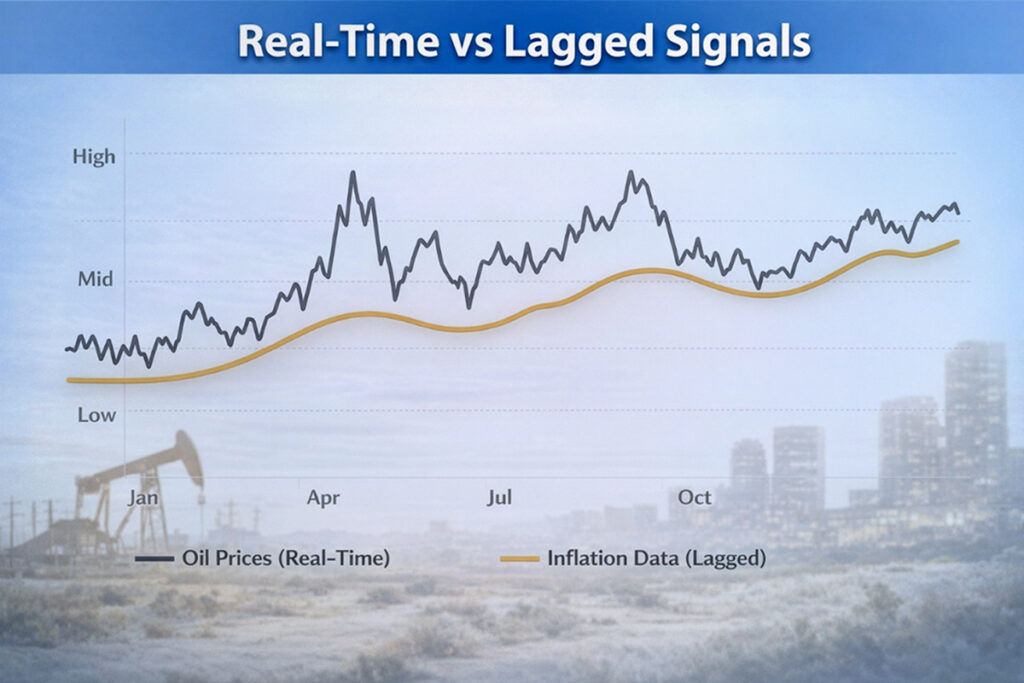
Oil and gas prices respond in real time to changes in supply, demand, and policy.
Inflation data, on the other hand, is released with a delay and reflects an average of many inputs over time.
This creates a simple but important gap:
- Energy prices can adjust quickly
- Inflation data may take time to reflect those changes
As a result, energy markets can be shifting even when macro indicators appear calm.
Price Changes Don’t Flow Through Evenly
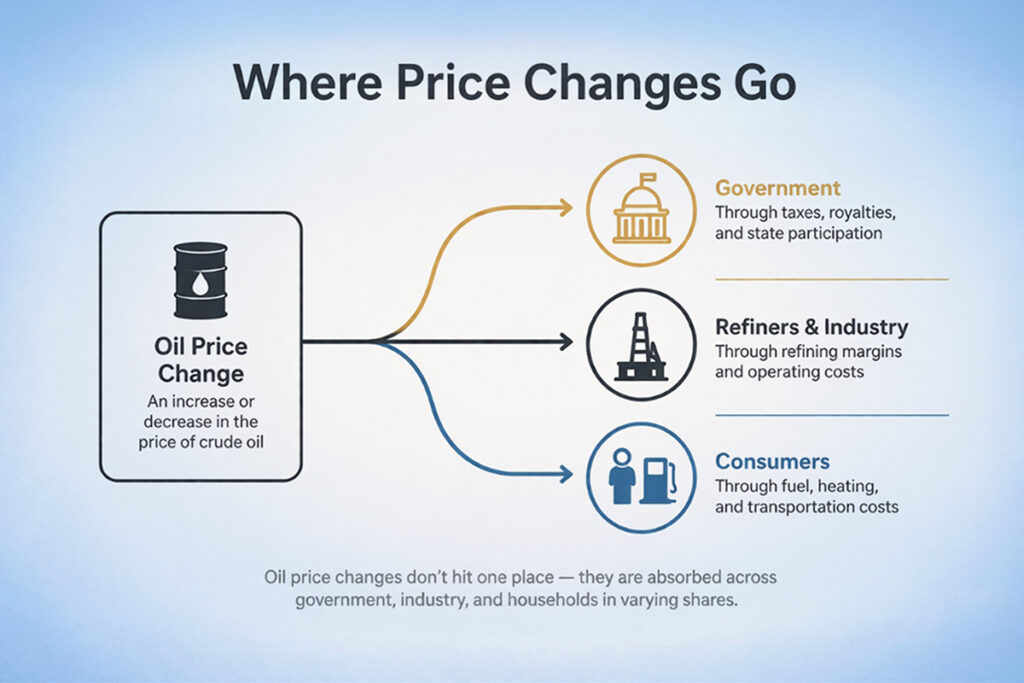
When oil prices move, the impact isn’t always passed directly to consumers.
Different parts of the system may absorb the change, including:
- Governments (through taxes or subsidies)
- Refiners and distributors (through margins)
- End consumers (through fuel prices)
This dynamic has been explored by the International Monetary Fund in its analysis of fuel price pass-through, which shows how policy and pricing structures can smooth short-term volatility in consumer prices.
For example, stable fuel prices don’t always mean stable profitability across the energy value chain.
Regional Differences Matter
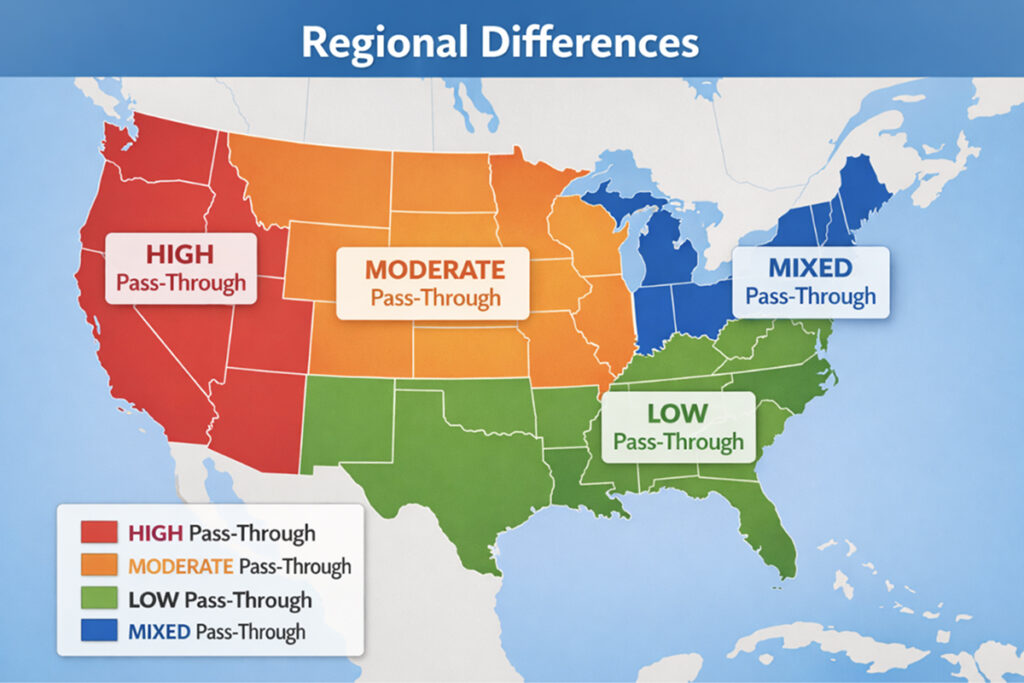
Even within the same country, price changes can show up differently.
Local factors like infrastructure, regulations, and competition affect how quickly and fully oil price changes are reflected in gasoline prices, with empirical research on oil-to-gasoline pass-through showing wide variation across regions.
This can lead to:
- Faster adjustments in some regions
- Slower or smaller changes in others
National averages can hide these differences, even when they are meaningful at a regional level.
Oil Still Influences the Bigger Picture
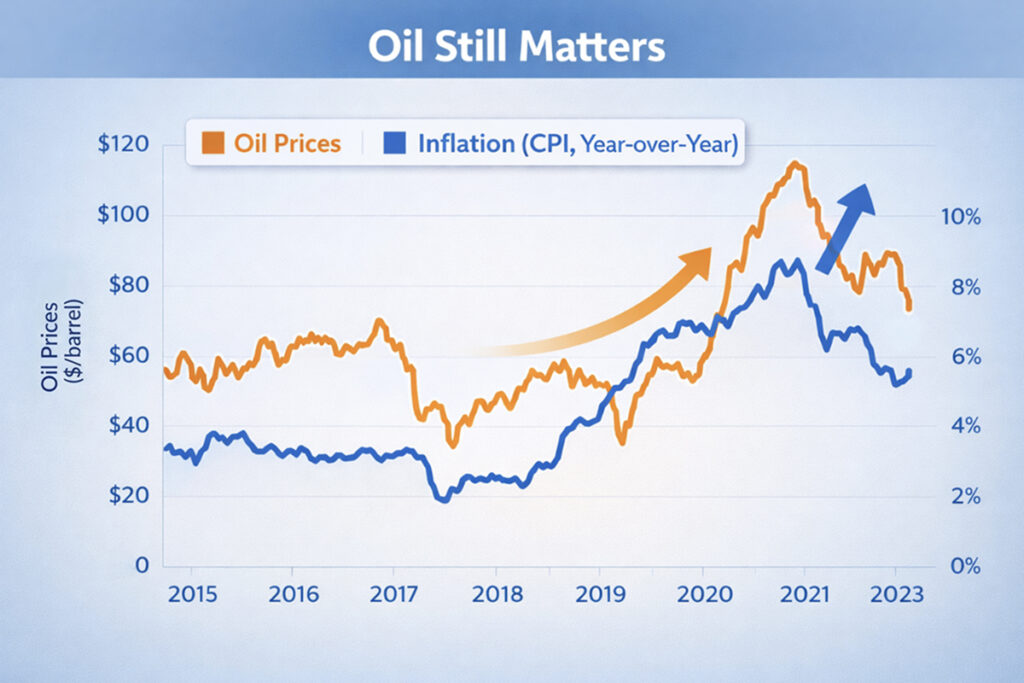
Even though energy is a smaller share of the economy than it once was, it still plays an important role.
Changes in oil prices can influence:
- Inflation trends
- Interest rate expectations
- Broader market sentiment
These effects may be gradual, but they can still shape how markets respond over time.
Where to Focus When Inflation Looks Stable
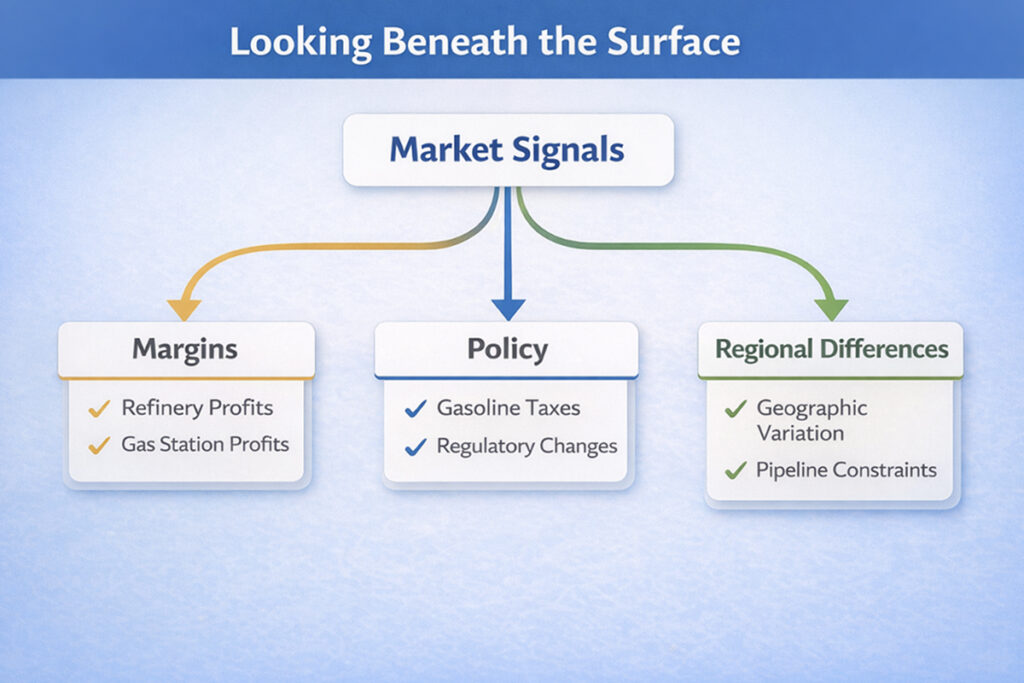
When inflation appears steady, it can be helpful to look a level deeper.
Some useful questions include:
- Where is price pressure being absorbed?
- How are margins changing across the value chain?
- Are regional differences emerging?
- Are indirect costs shifting beneath the surface, as research on how oil prices move through supply chains suggests these effects can extend beyond direct fuel costs?
These types of signals often move earlier than broad macro indicators.
A Simpler Way to Think About It
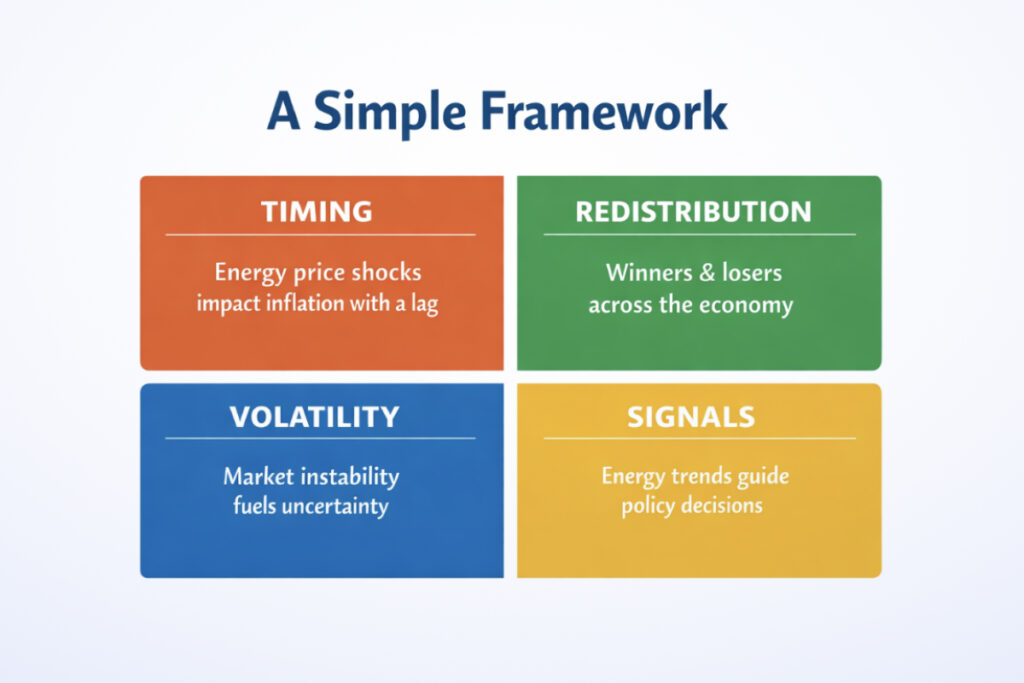
A practical way to frame the relationship between energy and inflation:
- Energy prices tend to move quickly
- Inflation data tends to move more slowly
- Price impacts are often redistributed, not eliminated
- Broader indicators may not capture early changes
Understanding this timing difference can make it easier to interpret what’s happening beneath the surface of market headlines.
Resources
International Monetary Fund – Fuel Price Pass-Through Working Paper
Explains how governments influence the transmission of global oil prices into domestic fuel markets
https://www.imf.org/-/media/Files/Publications/WP/2020/English/wpiea2020194-print-pdf.ashx
CESifo Working Paper – Oil to Gasoline Price Pass-Through
Empirical analysis of regional variation in gasoline pricing
https://www.econstor.eu/bitstream/10419/271994/1/cesifo1_wp10350.pdf
UCLA Anderson Review – Oil Prices and Inflation Distortion
Explores indirect effects of oil prices through supply chains
https://anderson-review.ucla.edu/how-oil-prices-distort-our-view-of-inflation/