
Share on:

Energy companies make investment decisions in a structured and disciplined way. While headlines often focus on oil prices or short-term market moves, most capital allocation decisions are based on longer-term thinking.

At a high level, companies are trying to answer a simple question: Where can we invest capital in a way that generates durable returns while managing risk?


Start with Strong Economics
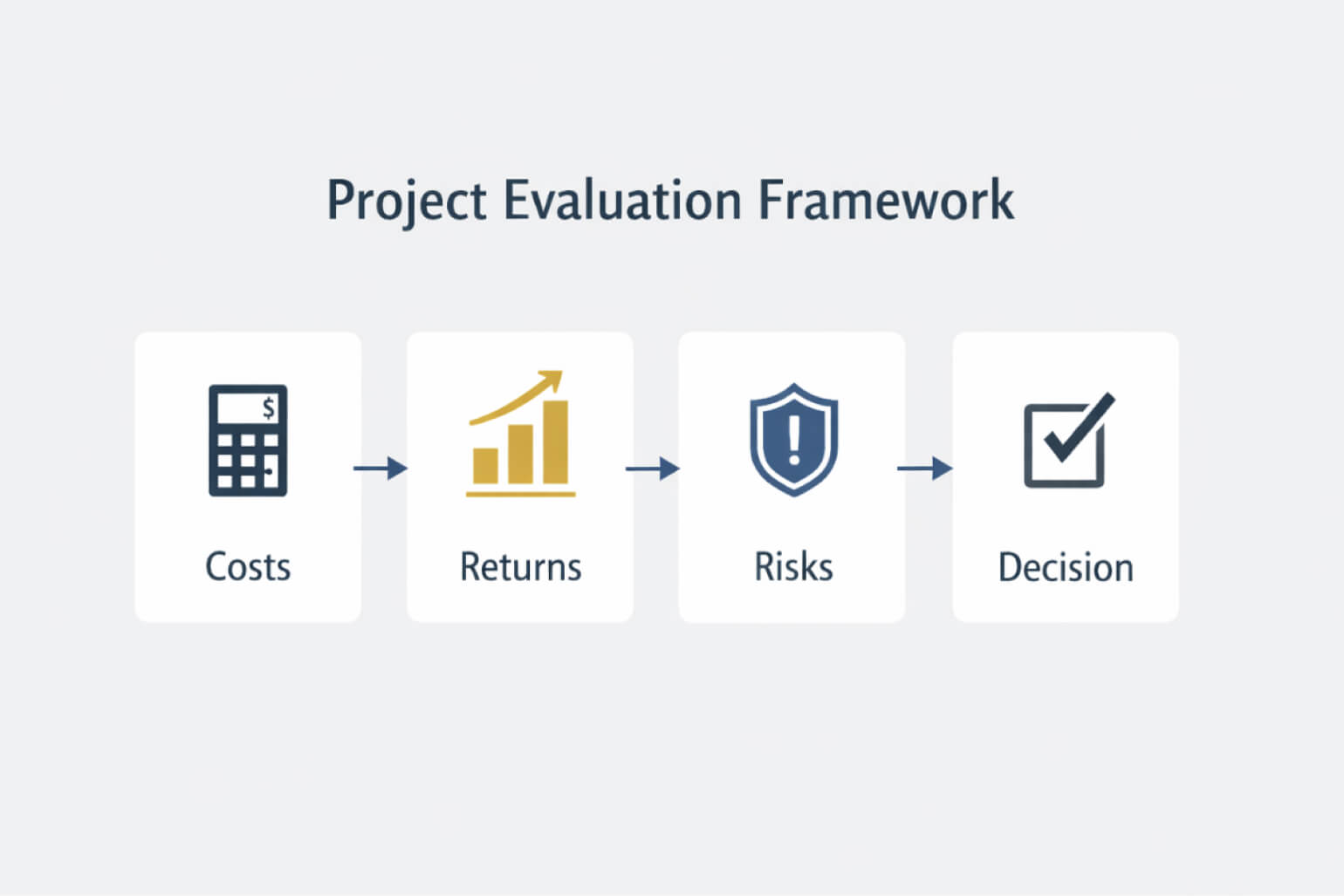
Flowchart showing how energy companies evaluate investment opportunities

Every potential project starts with a basic test—does it make economic sense?

Companies evaluate opportunities using metrics like breakeven cost, expected returns, and cash flow potential. Importantly, these are typically based on long-term assumptions rather than current market prices.

This approach helps prioritize projects that can remain viable across a range of scenarios—not just when conditions are favorable.

In practice, this often leads companies to focus on lower-cost opportunities that can perform even in more conservative environments.


Building a Balanced Portfolio
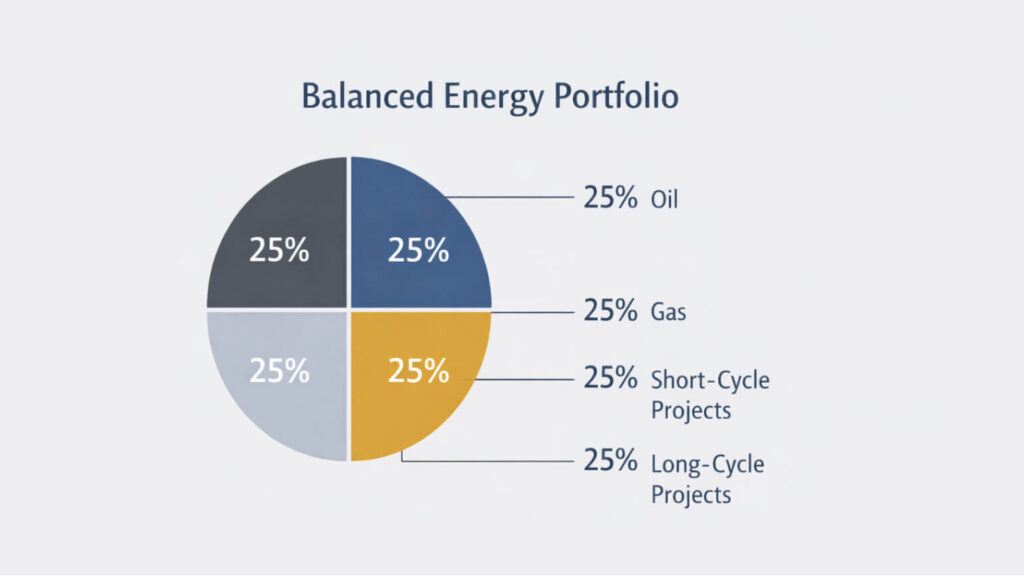
Chart showing diversified energy investment portfolio

Strong projects are important—but they also need to fit within a broader portfolio.

Energy companies balance different types of investments, such as:

  • Short-cycle vs. long-cycle projects
  • Oil vs. natural gas exposure
  • Existing assets vs. newer opportunities

Some companies continue to emphasize traditional upstream investments where returns remain competitive. Others are gradually increasing exposure to lower-carbon opportunities.

The goal is not to chase a single theme, but to build a portfolio that can perform across different market conditions.


Discipline Matters
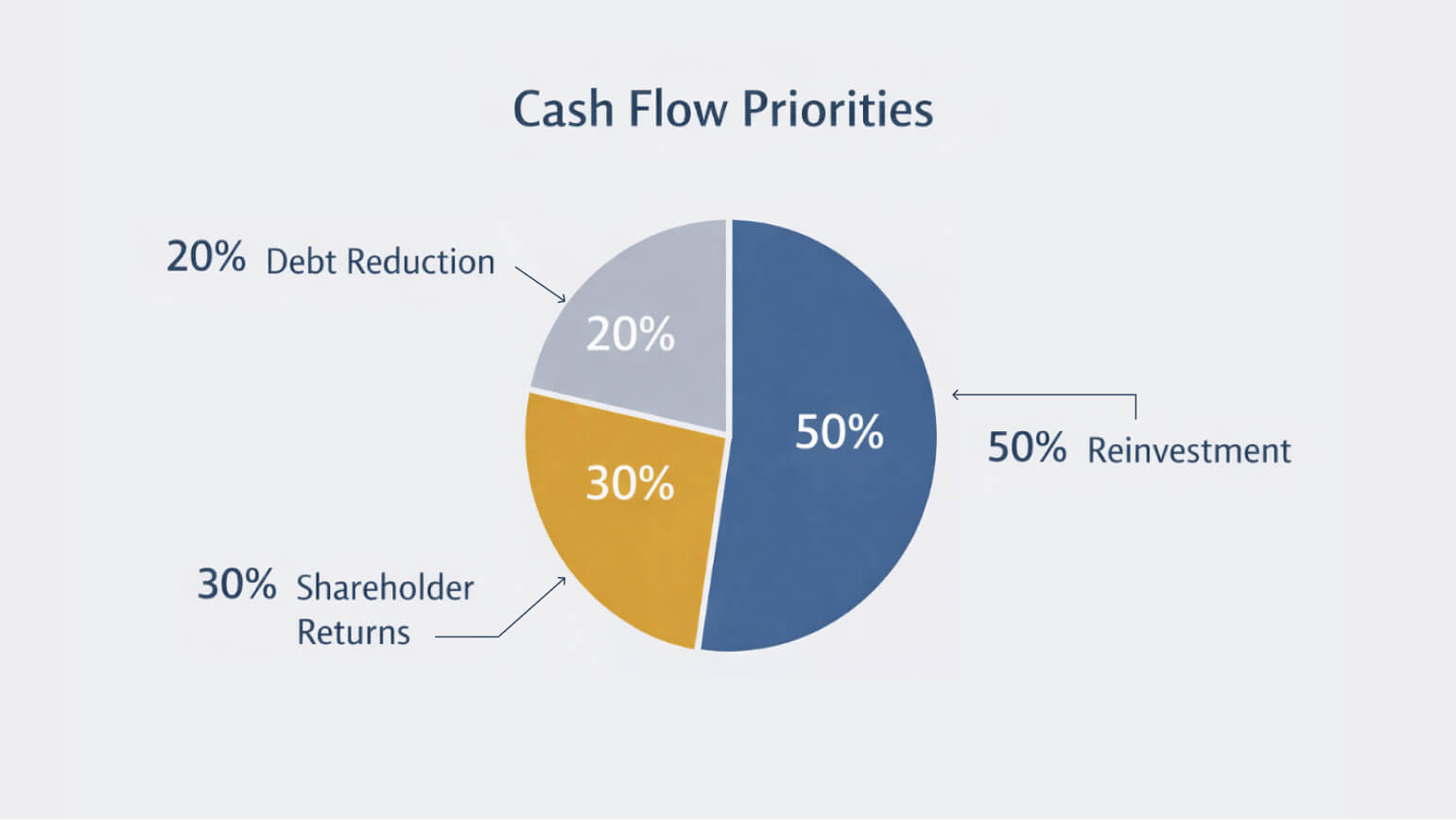
Breakdown of how energy companies allocate cash flow

In recent years, capital discipline has become a central focus across the sector.

Many companies are now more selective about how much they reinvest and how much they return to shareholders. Rather than prioritizing rapid growth, the emphasis has shifted toward:

  • Consistent cash flow
  • Strong balance sheets
  • Measured reinvestment

This more balanced approach can help companies stay resilient through cycles while maintaining flexibility.


Planning for an Evolving Energy System
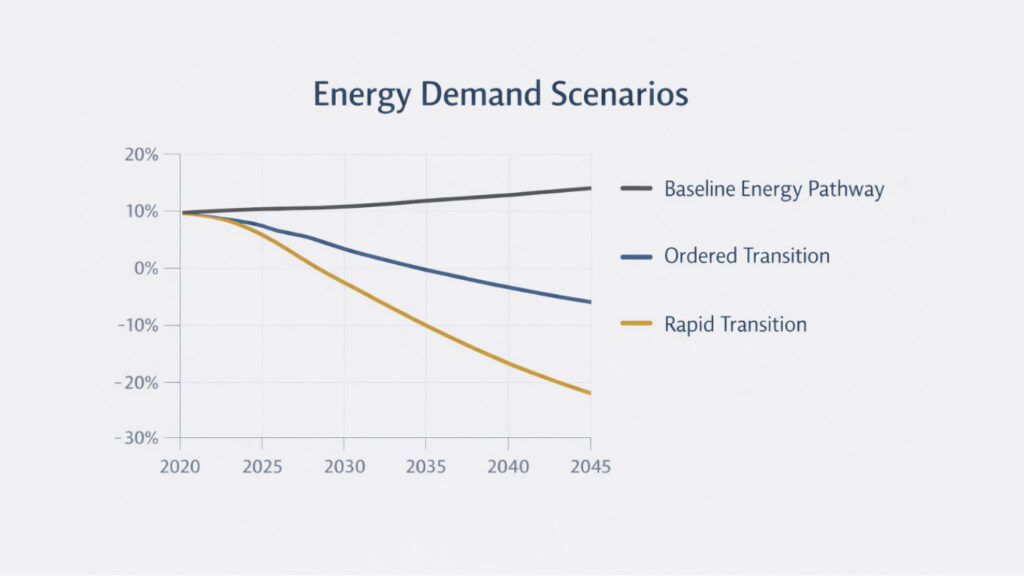
Graph comparing different future energy demand projections

Long-term planning increasingly includes a range of future scenarios.

Organizations like the International Energy Agency outline different pathways for energy demand, from current policy trends to more accelerated transitions.

As a result, companies are considering:

  • How long assets may remain competitive
  • How demand could evolve over time
  • Where new opportunities may emerge

While the pace of change is uncertain, this broader perspective helps guide more durable investment decisions.


A Continuous Process
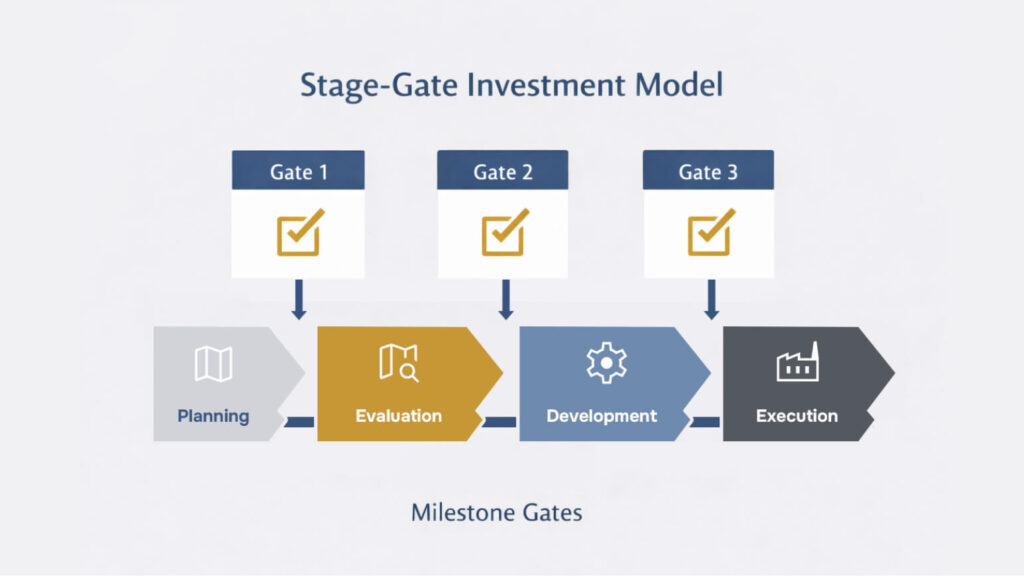
Diagram showing phased capital investment process

Capital allocation is not a one-time decision—it’s ongoing.

Companies regularly review their portfolios and adjust as new information becomes available. Projects are often funded in stages, with additional capital committed only after certain milestones are met.

This step-by-step approach allows companies to stay flexible and adapt to changing conditions.


What This Means for Investors
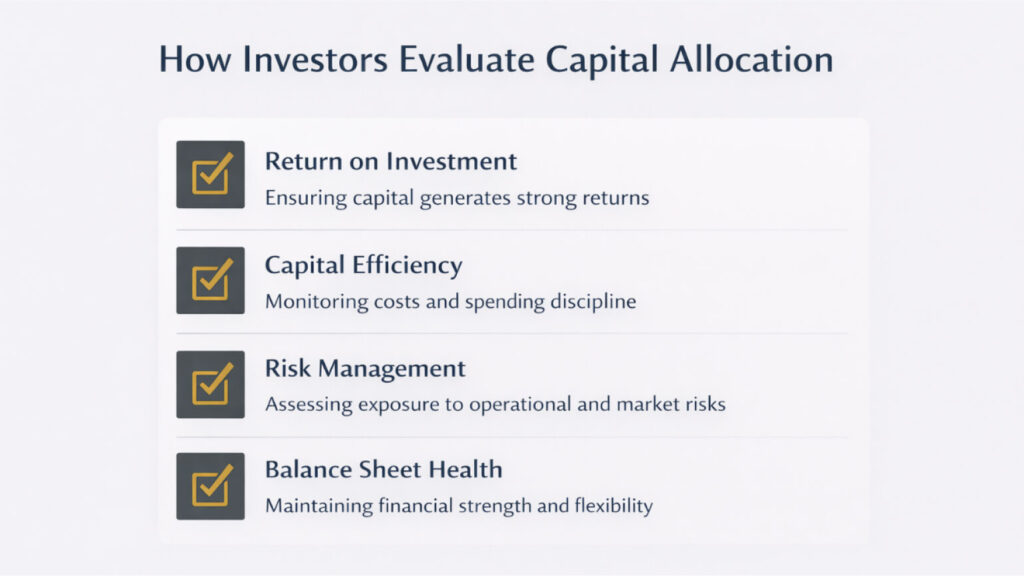
Framework for analyzing energy company investment decisions

For investors, capital allocation offers a useful lens for understanding energy companies.

Rather than focusing only on production growth or short-term price movements, it can be helpful to look at:

  • How consistently a company invests
  • Where capital is being directed
  • How risk is being managed

Across the industry, many companies are emphasizing lower-cost projects, steady returns, and disciplined spending.

Over time, these decisions shape how companies perform across cycles—and how they position themselves within a changing energy landscape.


Resources

Wood Mackenzie – Complexity of capital allocation for oil & gas companies
Explains how companies balance upstream investment, low-carbon investment, and shareholder returns
https://www.woodmac.com/blogs/the-edge/complexity-of-capital-allocation-oil-gas-companies/

International Energy Agency – Oil 2025
Provides global upstream investment trends and breakeven analysis
https://iea.blob.core.windows.net/assets/c0087308-f434-4284-b5bb-bfaf745c81c3/Oil2025.pdf

McKinsey – Keep calm and allocate capital
Outlines practices used in structured capital allocation processes
https://www.mckinsey.com/capabilities/strategy-and-corporate-finance/our-insights/keep-calm-and-allocate-capital-six-process-improvements


About Us

Eagle Natural Resources is a privately held oil and gas operating company based in Texas. We offer accredited investors direct access to U.S. energy projects focused on long-term value, transparency, and responsible development.

Contact

Eagle Natural Resources, LLC
RRC # 253075
5445 Legacy Dr. STE 440 Plano TX 75024
Phone: (833) 553-1534

There are significant risks associated with oil and gas investments. Information found on this site is for general purposes only and is not a solicitation to buy or an offer to sell securities. General information on this site is not intended to be used as individual investment or tax advice. Consult your personal tax advisor concerning the current tax laws and their applicability and effect on your personal tax situation.

Exclusive Opportunities Available Now

We’ve reserved a select number of cash-flowing energy investments for qualified investors. These offerings are available for a limited time and on a first-come basis.

Recipient – Registrant on www.EaglenNaturalResources.com

Disclosing Party – Lexstar Energy, DBA Eagle Natural Resources

Effective Date – Date of Registration

  1. Definitions.

(a) Disclosing Party and Recipient. The party disclosing Confidential Information is referred to as the “Disclosing Party,” and the party receiving Confidential Information is referred to as the “Recipient.”

(b) Confidential Information. “Confidential Information” means all information (whether in oral, written or electronic form) relating to the business, business relationship between disclosing party and recipient, personnel, marketing, customers, finances, products or services of the Disclosing Party, and includes confidential information received by the Disclosing Party from third parties.

  1. Permitted Use of Confidential Information.The Recipient must not use the Disclosing Party’s Confidential Information for any purpose without the explicit written approval of the Disclosing Party.
  2. Protect Confidential Information.The Recipient will keep the Disclosing Party’s Confidential Information confidential, and will also cause its directors, officers, employees and agents to keep the Disclosing Party’s Confidential Information confidential. The Recipient will take all necessary steps (including those steps that the Recipient takes to protect its own information that it regards as confidential) to maintain the confidentiality of the Disclosing Party’s Confidential Information.
  3. No Disclosure.The Recipient will not disclose the Confidential Information to any third party, nor the fact that it has obtained the Confidential Information, without the explicit written approval of the Disclosing Party.
  4. Legal Compulsion to Disclose Confidential Information.If the Recipient receives notice indicating that it may or will be legally required to disclose any of the Disclosing Party’s Confidential Information, it will notify the Disclosing Party promptly in writing so that the Disclosing Party may seek a protective order or other appropriate remedy, or waive compliance with this Agreement. If a protective order or other remedy is not obtained for whatever reason, or if the Disclosing Party waives compliance with this Agreement, the Recipient will disclose no more than that portion of the Confidential Information required to be disclosed.
  5. No Transfer.The Disclosing Party retains exclusive rights to its Confidential Information, and does not grant or transfer any right or license to the Recipient, except as set out in this Agreement.
  6. Return or Destruction.Within five business days of a request by the Disclosing Party:

(a) the Recipient will return to the Disclosing Party all materials in physical form (including any notes, summaries or memoranda relating to or derived from those materials by the Recipient) that contain the Disclosing Party’s Confidential Information or, at the Disclosing Party’s option, the Recipient may certify in writing that it has destroyed all such materials permanently and confidentially; and

(b) the Recipient will certify in writing that it has destroyed permanently all materials in electronic form (including emails and including any notes, summaries or memoranda relating to or derived from those materials by the Recipient) that contain the Disclosing Party’s Confidential Information.

  1. Disclosing Party Not Liable.The Recipient acknowledges that the Disclosing Party, its directors and its officers will have no liability to the Recipient resulting from the use of the Confidential Information by the Recipient.
  2. Non‑money Remedies.The Recipient acknowledges that money damages would not be a sufficient remedy for a breach of this Agreement, and that any court having jurisdiction may grant injunctive relief for an actual or threatened breach of any of the provisions of this Agreement, in addition to any other remedy available to the Disclosing Party.
  3. Integration.This Agreement constitutes the entire agreement between the parties relating to its subject matter. No amendment or waiver of this Agreement is binding unless agreed to in writing by the parties.
  4. Governing Law.This Agreement is governed by the laws in effect in the State of Texas.