
Why Risk Matters in Energy Investing
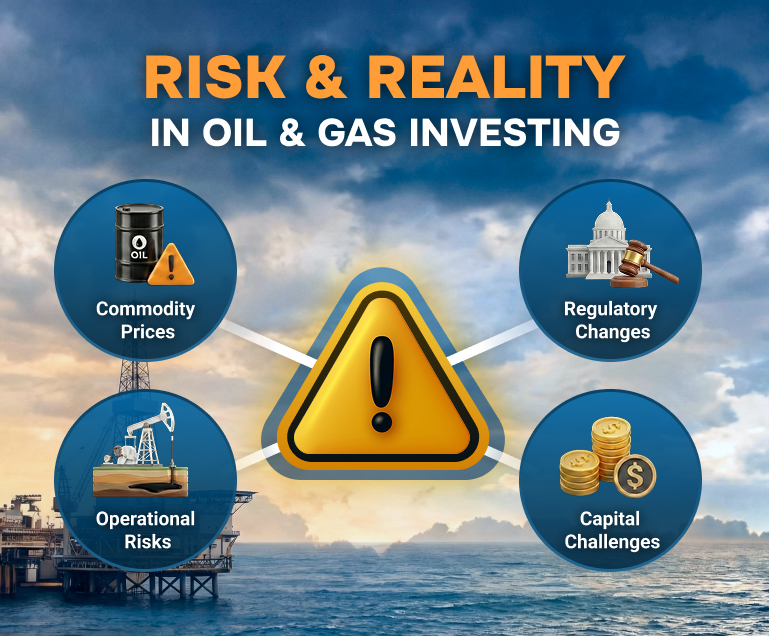
Oil and gas investing is often discussed in terms of returns, production growth, or market demand. Less often emphasized—but equally important—is risk. Every energy investment carries uncertainty, and understanding where that uncertainty comes from is a foundational step for long-term investors.
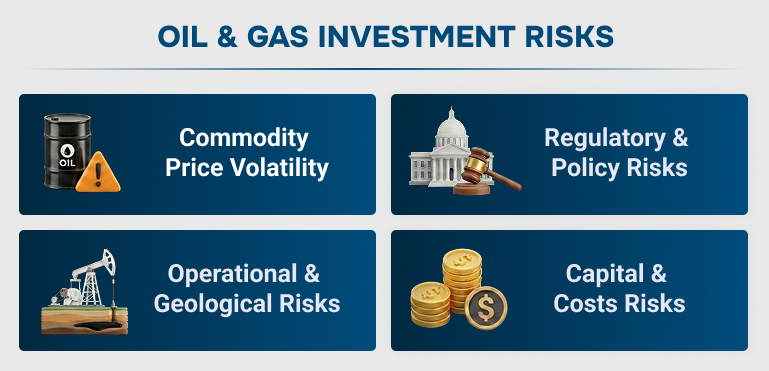
Risk does not automatically imply poor outcomes. In energy markets, risk and return are closely linked. The key is knowing which risks exist, how they behave, and why they matter.
Commodity Price Volatility
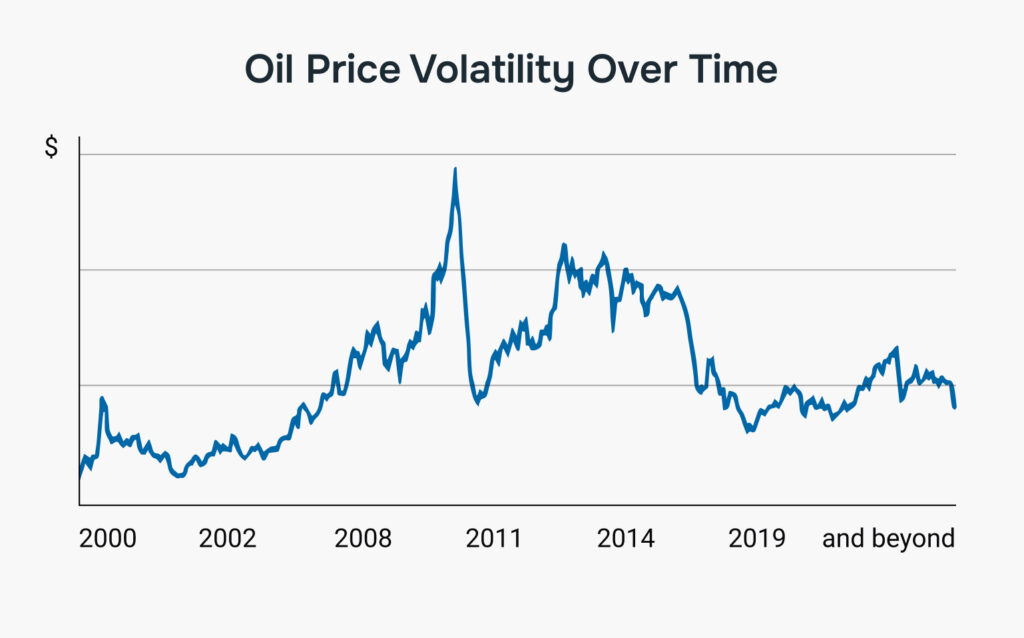
Oil and natural gas prices are influenced by global supply and demand, geopolitics, weather, and economic conditions. These forces can change quickly, creating price volatility that affects revenues, cash flow, and project economics.
For investors, this means performance can fluctuate even when production remains steady. Price risk is inherent to commodities and cannot be eliminated—only understood and managed.
Regulatory and Policy Risk
Energy development operates within a regulatory framework that can evolve over time. Changes in permitting rules, environmental standards, taxation, or land access can impact project timelines and costs.
Policy risk varies by region and asset type, making geographic diversification and regulatory awareness important considerations for investors evaluating long-lived energy assets.
Operational and Geological Risk
Oil and gas projects depend on complex operations and subsurface geology. Drilling results, reservoir performance, equipment reliability, and infrastructure access all affect outcomes.
Even with advanced technology and data, uncertainty remains. This is why operational expertise and conservative assumptions play a critical role in responsible energy investing.
Capital Intensity and Cost Overruns
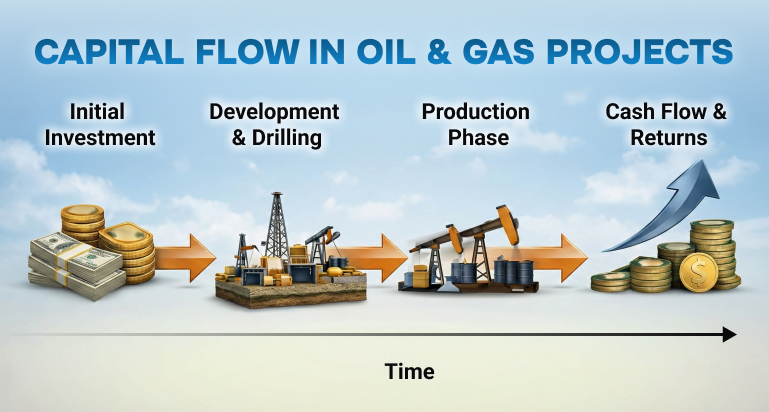
Energy projects often require significant upfront capital before generating returns. Unexpected delays, inflation in service costs, or supply chain constraints can increase project expenses.
Capital discipline—how projects are planned, funded, and managed—can meaningfully influence long-term performance, especially during periods of market stress.
Market Cycles and Timing Risk
Energy markets are cyclical. Periods of high prices often lead to increased investment, which can eventually result in oversupply and price declines. Conversely, underinvestment can tighten supply over time.
Understanding these cycles helps investors set expectations and avoid evaluating long-term assets based solely on short-term conditions.
Understanding Risk vs. Avoiding It
Risk is not something energy investors can avoid entirely. Instead, it is something to evaluate, price, and manage. A clear understanding of risk supports better decision-making, more realistic expectations, and stronger alignment with long-term investment goals.
For many investors, education is the first step toward confidence.
Resources
U.S. Energy Information Administration (EIA)
Authoritative data and analysis on U.S. oil, gas, and energy markets.
https://www.eia.gov
These resources are provided for general education and independent research. They are not intended as market forecasts or investment guidance.